Introduction
The world of competitive gaming has undergone a massive transformation in recent years. What was once a niche hobby has evolved into a multi-billion-dollar global industry, with millions of fans tuning in to watch professional gamers battle it out in highly structured tournaments. Esports, as it is now known, has emerged as a legitimate form of entertainment, competition, and career. Unlike traditional sports, esports takes place in the digital realm, but its impact on culture, business, and society is no less profound. As esports continues to grow in popularity, it is reshaping the way we think about competition, entertainment, and even the future of sports itself.
The Rise of Esports: A Digital Phenomenon
Esports’ journey began in the late 20th century, with early gaming competitions being organized in small communities or on university campuses. However, it wasn’t until the rise of online multiplayer games, such as Counter-Strike, Warcraft, and League of Legends, that esports started to gain significant traction. The ability to play and compete with people across the globe fueled a growing interest in professional gaming. Major events like the ESL (Electronic Sports League) and DreamHack began to bring competitive gaming to a larger audience, establishing a foundation for what would become a massive entertainment industry.
In the early 2000s, esports was still mostly underground, with prize money in tournaments being relatively small. However, as internet connectivity improved and gaming technology advanced, the scale of esports tournaments exploded. The release of high-profile games like Dota 2 and Fortnite introduced an entirely new level of competition, drawing sponsorships from large companies and attracting huge audiences, both in person and via live streams. By the mid-2010s, the term “esports” was widely recognized, with some major tournaments offering prize pools in the millions of dollars.
The Esports Ecosystem: A Complex Web of Competitions, Teams, and Fans
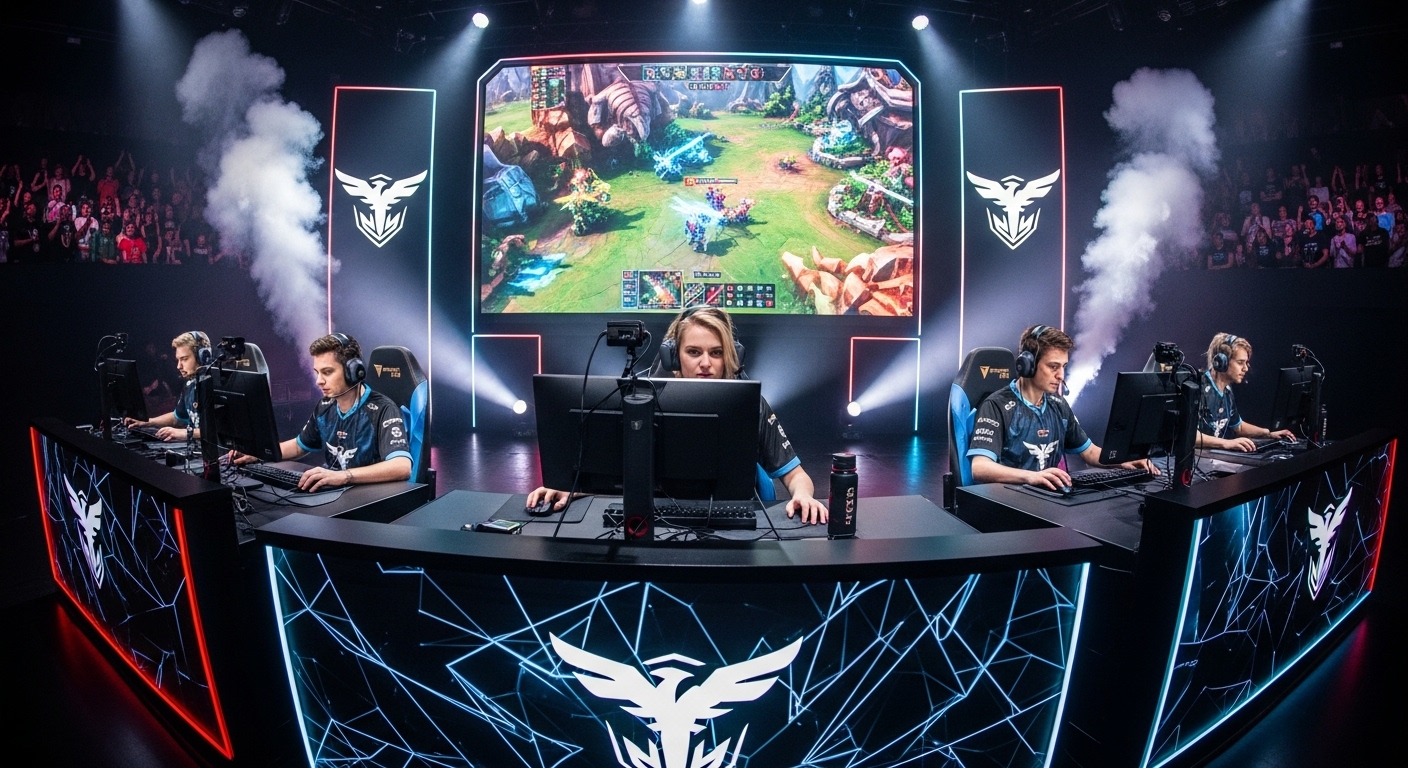
Esports today is an intricate ecosystem comprising professional leagues, players, coaches, fans, broadcasters, and sponsors. Central to the ecosystem are the esports organizations—teams that recruit and train professional gamers to compete in various games. These teams often function like traditional sports franchises, with highly structured rosters, coaching staff, and support staff.
The competitive landscape in esports is vast, with games spanning a range of genres, from first-person shooters to real-time strategy games to multiplayer online battle arena (MOBA) games. League of Legends, Dota 2, Call of Duty, Counter-Strike: Global Offensive, Overwatch, and Fortnite are just a few of the prominent titles that attract millions of players and spectators. For each of these games, there are professional leagues, regional tournaments, and world championships that bring together the best players in the world. The annual League of Legends World Championship, for instance, can draw over 100 million viewers, rivaling the viewership of some of the biggest sports events on the planet.
Esports also thrives in the world of live streaming, with platforms like Twitch, YouTube Gaming, and Facebook Gaming serving as virtual arenas where fans can watch their favorite players in real-time. Streamers, often top-tier players or content creators, engage with audiences through live commentary, gameplay, and interactive sessions. These platforms offer fans an unprecedented level of access to their favorite gamers and foster a strong sense of community among viewers.
The Players: The Superstars of Esports
At the heart of esports are the players—the digital athletes who dedicate countless hours honing their skills, learning strategies, and refining their in-game mechanics. Professional gamers are not only highly skilled but are also incredibly disciplined, often training for several hours a day to stay competitive. Esports requires the same, if not more, commitment as traditional sports, with players needing to maintain focus, reflexes, and communication skills under extreme pressure.
Unlike traditional athletes, esports players often have to stay sharp across multiple games and genres, as the competitive landscape can change rapidly. A game that is popular one year might be replaced by a newer title the next, requiring players to adapt quickly. This fluidity makes esports a dynamic and constantly evolving field, where top players need to be not just skilled but adaptable.
While esports players might not be as physically active as their counterparts in traditional sports, their mental and cognitive performance is just as crucial. Reaction times, strategic thinking, teamwork, and mental endurance are all tested in the heat of competition. In fact, many esports professionals are treated like traditional athletes, with dedicated trainers, psychologists, and nutritionists helping them optimize their performance.
Some of the biggest names in esports—like Faker in League of Legends, s1mple in Counter-Strike: Global Offensive, and Ninja in Fortnite—have achieved celebrity status, with millions of fans across the world. These players not only represent their teams but also serve as ambassadors for the entire industry, showing that esports is not just about the game but about entertainment and personality.
The Audience: A Global Community of Fans
Esports has cultivated a massive and diverse fan base, with viewers from all over the world tuning in to watch tournaments, live streams, and events. Unlike traditional sports, where fans tend to support local or national teams, esports fans are united by a shared love of games, individual players, and even specific brands or organizations.
Esports fans are incredibly dedicated and passionate. Some fans support their favorite teams by purchasing merchandise, attending live events, or following players on social media. Others engage in the esports community by participating in forums, discussing strategies, or even creating fan content like memes, artwork, and fan fiction. This sense of community is one of the key drivers behind esports’ explosive growth.
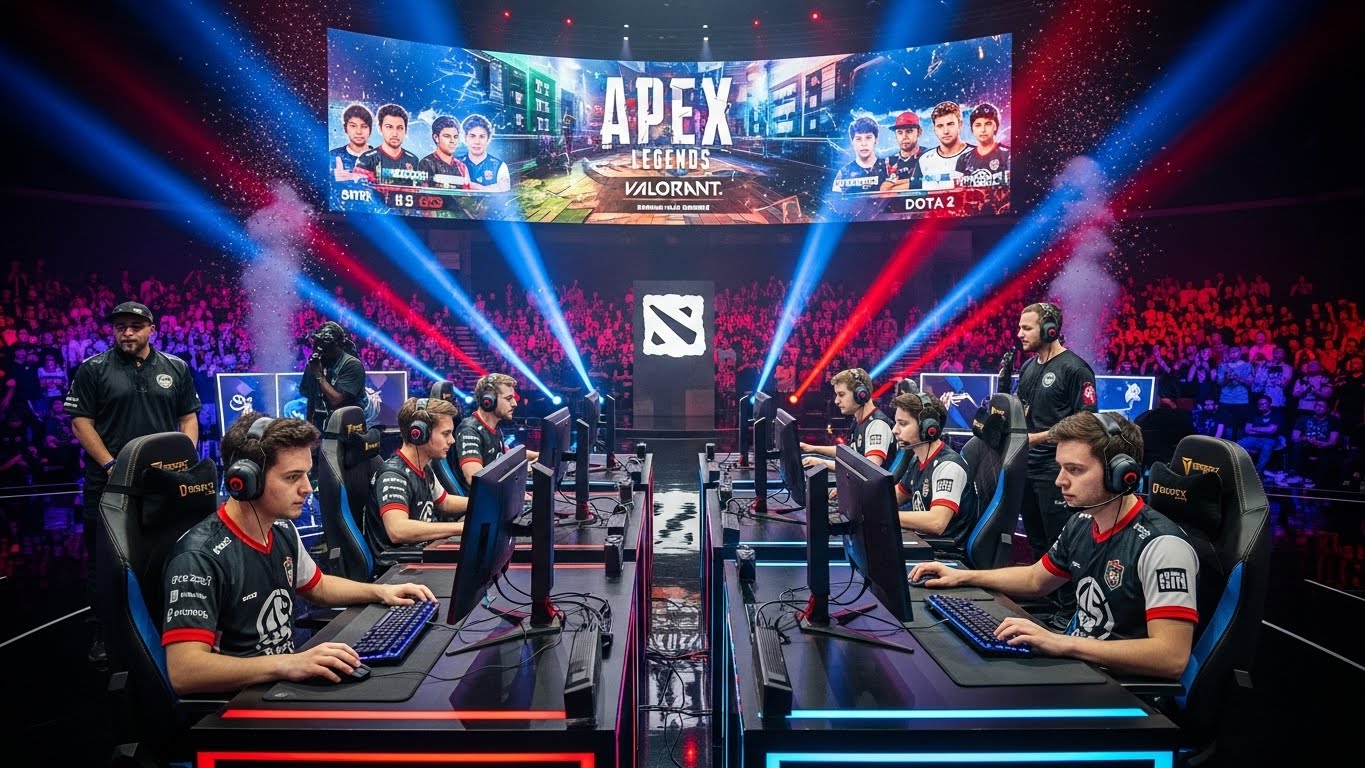
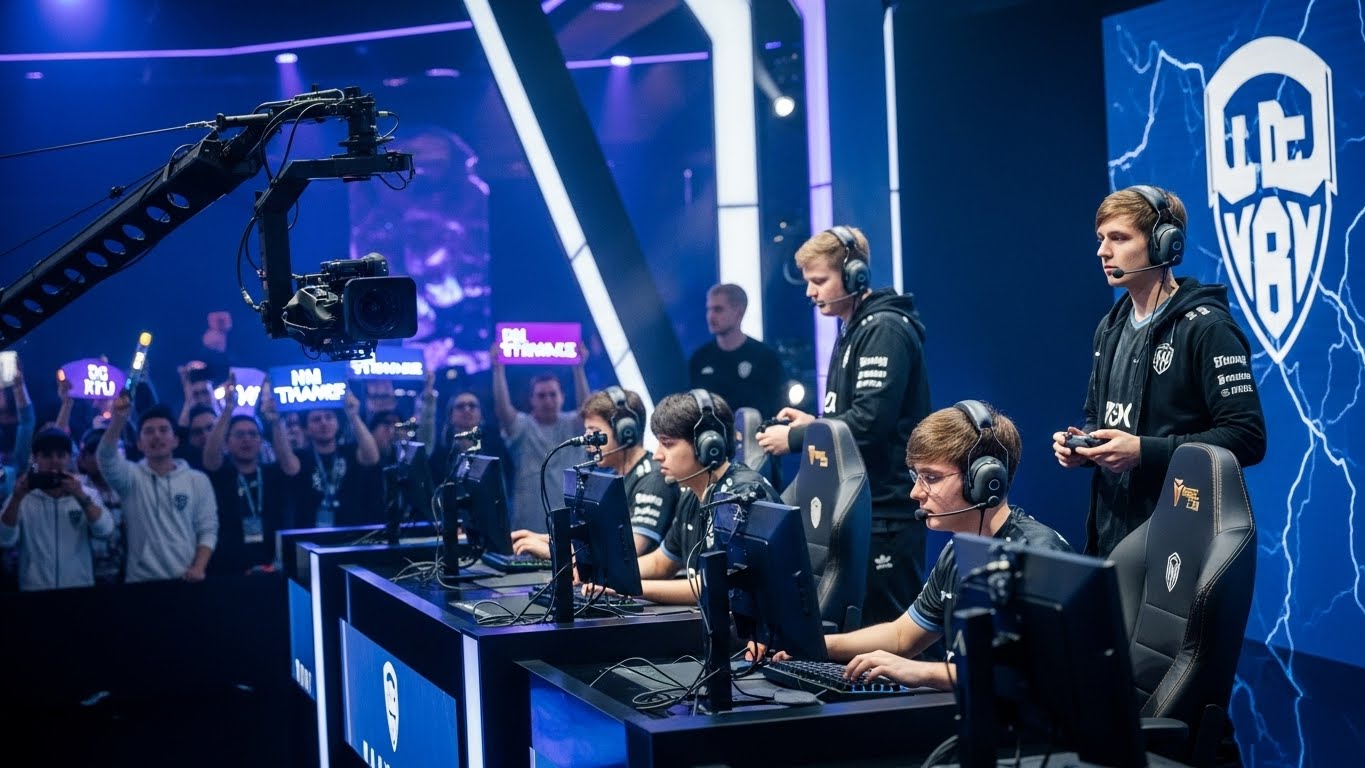
Live events, such as ESL One, The International (TI), and Overwatch League, have become major spectacles, drawing thousands of fans to arenas and millions more watching online. These events often feature not just the tournaments themselves but a full festival atmosphere, with cosplay competitions, merchandise stalls, and sponsor activations. The atmosphere at these events can rival that of traditional sporting events, with fans chanting, waving banners, and celebrating their favorite teams.
The Business Side of Esports
Esports is not only about players and fans; it’s also a thriving business. The industry has seen a surge in sponsorships from major companies, including Coca-Cola, Intel, Mercedes-Benz, and Nike. These brands see the value in aligning themselves with esports, as the audience is young, tech-savvy, and engaged. Sponsorship deals can provide organizations with significant revenue, which, in turn, fuels player salaries, tournament prize pools, and team operations.
Another significant revenue stream for esports is advertising, particularly through digital platforms like Twitch. Advertisers are keen to target the esports demographic, and their investment helps fund the infrastructure that supports the industry. This includes production costs for tournaments, broadcasting fees, and prize money for players. Esports organizations have also found innovative ways to monetize through merchandise, exclusive content, and even content creators who earn revenue through live streaming and sponsorships.
The financial growth of esports has also led to an increase in esports betting. Platforms that allow fans to place bets on outcomes of esports matches have become increasingly popular. This has generated both excitement and concern, as it introduces an element of gambling into the world of esports. While esports betting has opened up new revenue channels, it also raises questions about ethics, regulation, and the potential for match-fixing.
The Future of Esports: A New Era of Competition
The future of esports looks incredibly bright. With the continued development of gaming technology, including virtual reality (VR) and augmented reality (AR), esports could see a shift toward even more immersive and interactive experiences. As gaming becomes more accessible, esports tournaments could move beyond the digital world and into physical spaces, blending gaming with traditional sports.
One area of potential growth is the integration of esports into educational and collegiate systems. Already, universities in the United States are offering scholarships for esports athletes, and many are establishing dedicated esports teams and facilities. As esports gains recognition, it is possible that it will be included in high school and college sports programs, providing players with formal training and recognition.
Esports is also becoming more inclusive, with a growing number of women and underrepresented groups participating in tournaments and breaking barriers. While the industry has historically been dominated by male players, female esports leagues and competitions are gaining traction, giving women a platform to compete at the highest levels. This trend reflects the broader societal push toward gender equality and diversity in all areas of life.
Another important trend is the continued rise of mobile esports. As smartphones become more powerful, mobile gaming is seeing a surge in popularity, particularly in regions like Southeast Asia and South America. Games like PUBG Mobile and Mobile Legends have massive player bases, and mobile esports tournaments are beginning to rival their PC counterparts in terms of viewership and sponsorships.
Conclusion: Esports as a Cultural Mainstay
Esports has quickly evolved from a niche activity to a global cultural phenomenon. Its growth is a testament to the power of digital innovation and the universal appeal of competition. With dedicated players, passionate fans, and a growing business ecosystem, esports is now firmly positioned as a major force in the world of entertainment. As it continues to expand, esports will likely push the boundaries of what it means to be a “sport” and how it can influence broader society.